HE-L / Liquid helium

Liquid helium, delivered in the right Dewar route.

Portable Dewar supply is evaluated around the instrument, transfer interface, expected consumption, site access and replenishment window. Final volume, vessel, documentation and delivery method are confirmed during project review.

Define the cryogenic brief
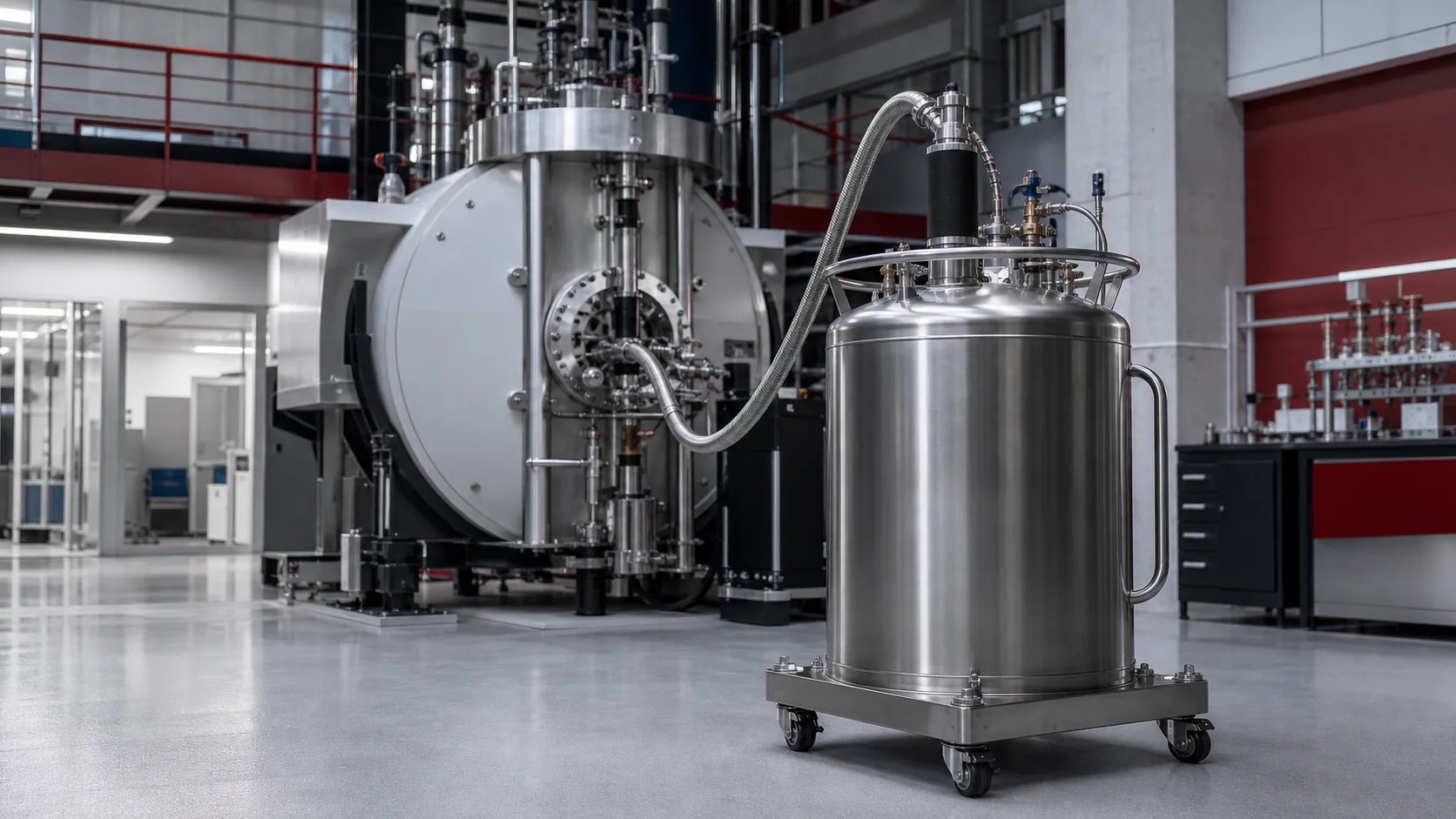
Representative stainless-steel liquid helium Dewar connected to cryogenic research equipment
Representative application image — final equipment is project-confirmed
01Instrument-ledThe magnet, cryostat or experiment defines the transfer brief.
02Loss-awareDewar size and delivery timing must account for transfer and boil-off.
03Site-controlledVentilation, access and trained cryogenic handling are confirmed first.

Application routes

Start with the cold load, not the vessel size.

Liquid helium supply is most useful when the equipment requirement, transfer method and replenishment responsibility are defined together.

HE-L01 / Magnet systems

Superconducting magnets

Liquid helium is used to maintain low-temperature superconducting magnet systems, including instrument-specific MRI and NMR routes. Delivery must follow the equipment manufacturer’s procedures and the site service plan.

Define before selection

  • Instrument and approved fill method
  • Current helium level and required volume
  • Transfer connection and access
  • Service window and site controls
HE-L02 / Research

High-field & low-temperature research

Research magnets, cryostats and low-temperature experiments may require liquid helium for cool-down, steady operation or a scheduled experimental campaign.

Define before selection

  • Cryostat or magnet configuration
  • Cool-down or top-up requirement
  • Expected consumption and reserve
  • Transfer-line arrangement
HE-L03 / Distribution

Liquefaction & distribution

Dewars can connect a liquefier, distribution point and end user where a controlled portable liquid-helium route is required.

Define before selection

  • Fill and withdrawal method
  • Dewar turnaround responsibility
  • Transport and site access
  • Return, refill and replenishment cycle

Industry reference

Representative portable Dewar capacities.

These are examples from one official equipment manufacturer, included to show the range found in the market. They are not Lesoo specifications or universal sizes.

Example liquid-helium Dewar configurations — single manufacturer reference
Net capacityEmpty weightOutside diameterOverall heightStatus
30 L7.9 US gal59.3 kg / 131 lb509 mm / 20 in1,221 mm / 48 inExample configuration
60 L15.9 US gal87 kg / 192 lb611 mm / 24 in1,298 mm / 51 inExample configuration
100 L26.4 US gal95.5 kg / 210 lb611 mm / 24 in1,501 mm / 59 inExample configuration
250 L66.0 US gal154.5 kg / 340 lb814 mm / 32 in1,781 mm / 70 inExample configuration
500 L132.1 US gal255.5 kg / 562 lb1,069 mm / 42 in1,857 mm / 75 inExample configuration

Final liquid-helium quantity, vessel model, usable capacity, transfer equipment, pressure arrangement, transport approval, documentation and availability are confirmed against the application, destination and delivery plan.

01

Required volume

Confirm cool-down, top-up or campaign demand and the usable reserve required on site.

02

Transfer interface

Match the approved transfer line, neck access, withdrawal method and receiving equipment.

03

Delivery window

Coordinate timing, access, handling resources and the effect of storage duration.

04

Dewar cycle

Define ownership, return, refill, changeover and replenishment responsibilities.

Cryogenic handling

Plan the transfer area before delivery.

Liquid helium presents extreme-cold, oxygen-displacement and pressure-management hazards. Site procedures must be established by qualified personnel for the selected vessel and equipment.

01

Ventilation

Assess the room, vent path and need for oxygen monitoring before storage or transfer.

02

Cryogenic PPE

Define eye, face, hand and body protection for cold surfaces, liquid and boil-off exposure.

03

Pressure relief

Keep vessel and transfer-line relief arrangements unobstructed and matched to the procedure.

04

Trained transfer

Use approved equipment, trained operators and a documented connection and disconnection sequence.

Project inputs

Build the liquid-helium brief.

Share the operating requirement first. A final supply proposal follows technical, safety, logistics and commercial review.

01Application
02Instrument or cryostat
03Required volume
04Current helium level
05Transfer interface
06Site & destination
07Delivery window
08Safety & documents

Liquid helium questions

Select the route around the cold load.

The vessel only works when transfer, access, timing and responsibility are also defined.

01Which Dewar sizes are available?

The page shows manufacturer examples from 30 L to 500 L to explain the market range. Final usable capacity, vessel model and availability are confirmed for the project.

02How is a Dewar selected?

Selection starts with the application, required volume, transfer interface, site access, delivery window, return cycle and safety controls.

03Are these dimensions Lesoo specifications?

No. They are examples from one official equipment manufacturer and are not Lesoo stock specifications or universal sizes.

04What should an enquiry include?

Provide the instrument or cryostat, current condition, required volume, transfer arrangement, destination, site access, delivery date and documentation requirements.

Reference basis

One source example, clearly labelled.

Content reviewed 13 August 2026. Published capacities and dimensions are manufacturer examples; final equipment remains project-confirmed.

Project-based liquid helium

Define the Dewar and delivery route.

Send the application, equipment, destination, volume, transfer arrangement and required delivery date for review.

Discuss liquid helium supply