HE-O / Offshore helium solutions

Offshore helium, planned around the operation.

Diving gases, testing, subsea work and offshore commissioning begin with different gas, handling, analysis and replenishment requirements. The selected asset and certification route are confirmed project by project.

Start an offshore brief
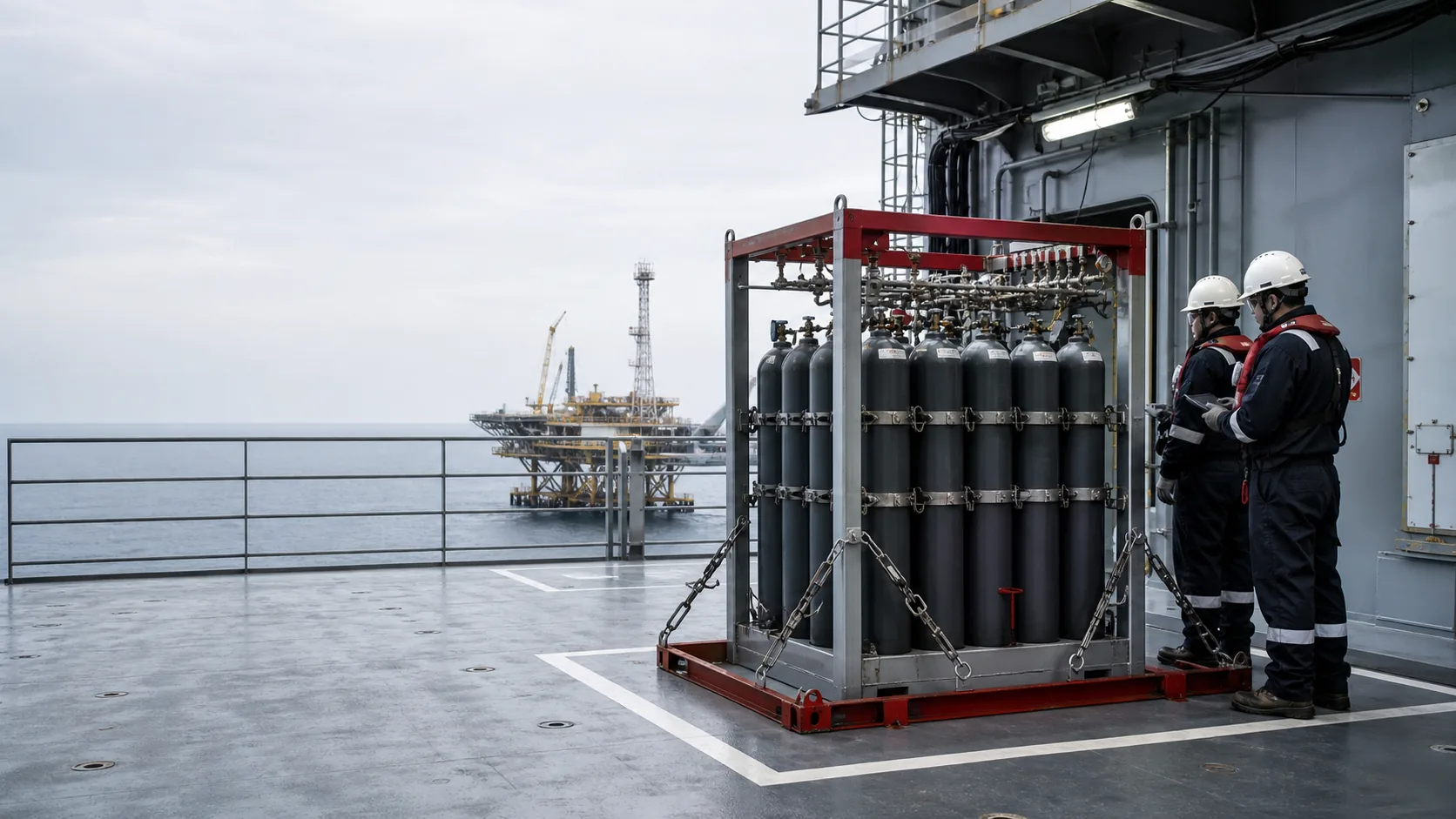
Representative secured offshore gas pack on a support vessel
Representative application image
01Operation-ledStart from diving, testing, subsea or commissioning duty.
02Asset-specificFrame, cylinders, manifold and lifting set are selected together.
03Route-controlledPort call, acceptance, documentation and reserve are planned early.

Solution routes

Choose by the operation, not by one generic quad.

The project route determines the required gas, identification, analysis, pressure, frame, documentation and replenishment plan.

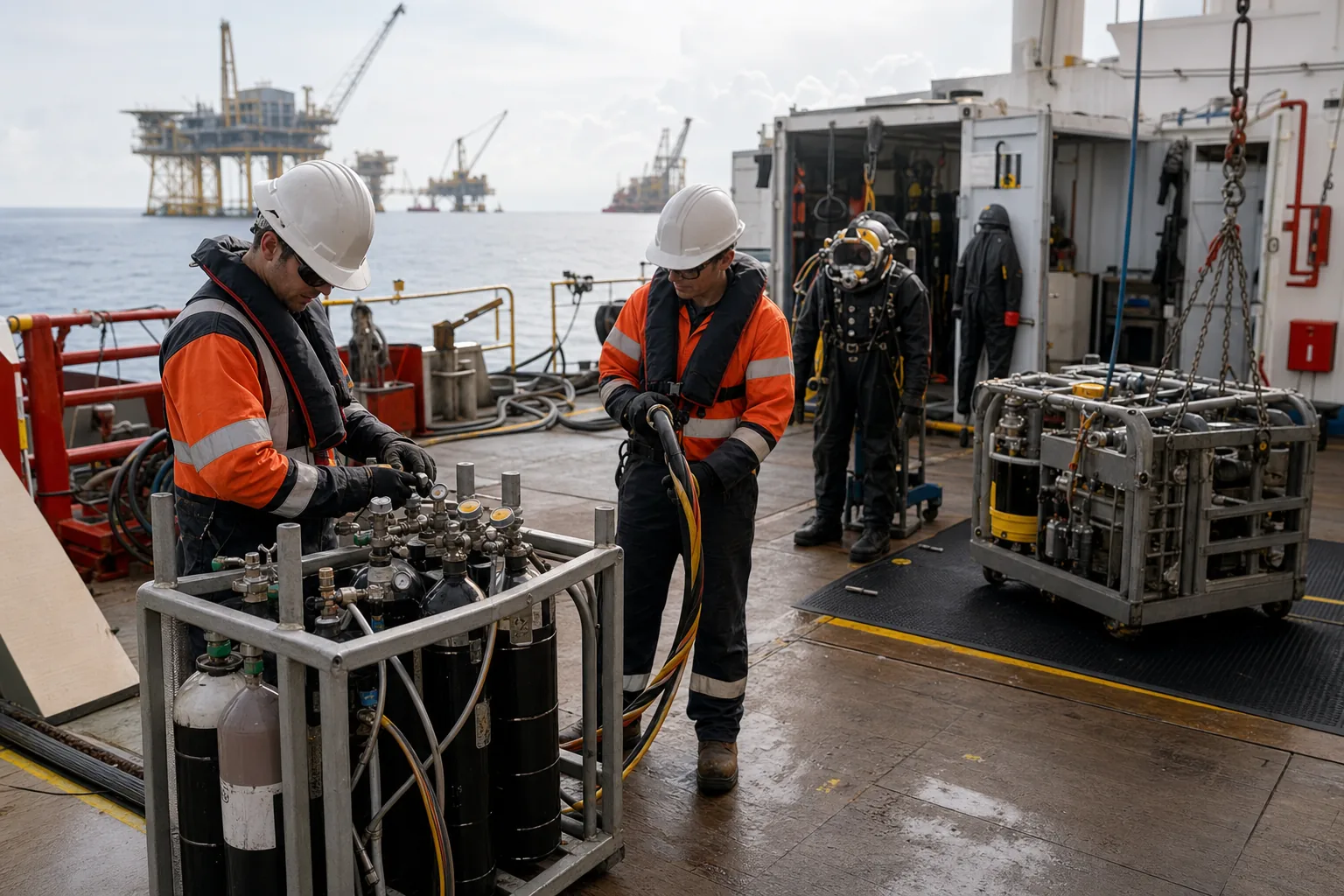
Representative diving gas quad and support equipment on an offshore vessel
HE-O1 / Detail page

Diving gas solutions

Commercial diving, heliox and trimix requirements, and saturation-diving support planned around the approved gas specification.

  • Commercial diving
  • Heliox & Trimix
  • Saturation diving support
View diving gas solutions
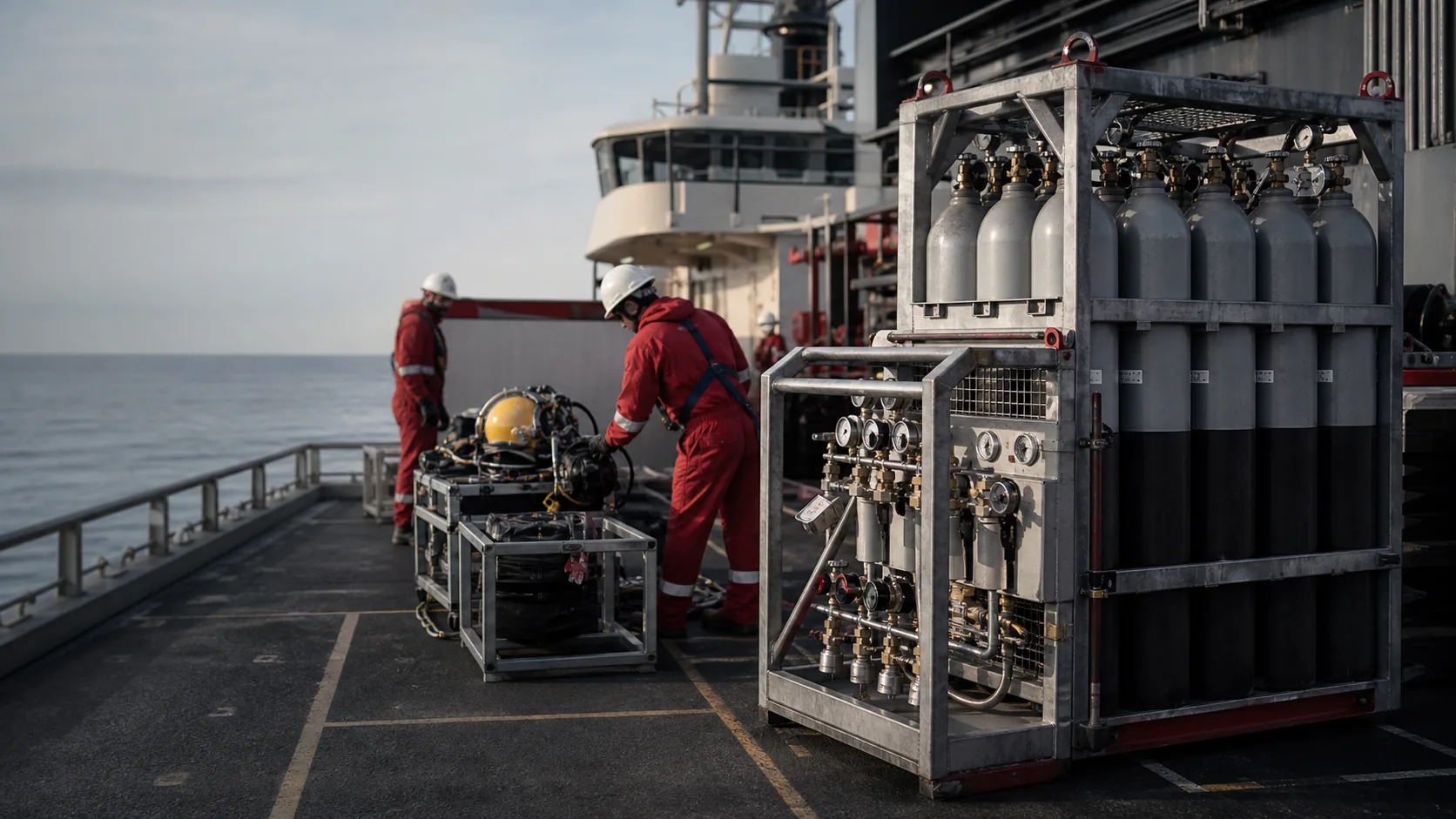
Representative surface gas support for a subsea maintenance operation
HE-O2 / Project route

Subsea operations

Surface gas supply and handling evaluated around subsea welding, cutting, inspection, repair and maintenance work.

  • Subsea welding & cutting
  • Offshore maintenance support
  • Project replenishment
Review project inputs
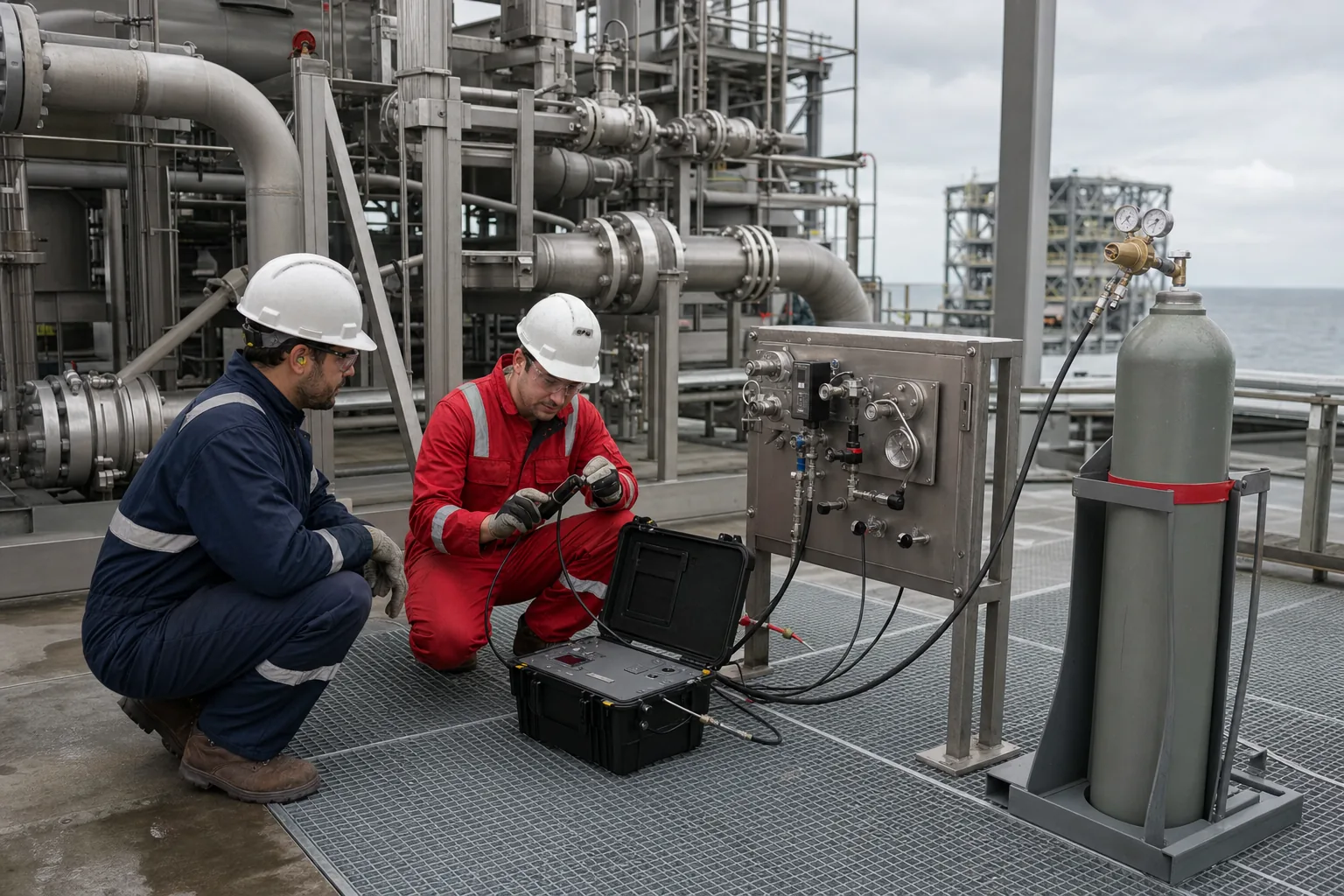
Representative helium leak-testing and commissioning work on offshore process piping
HE-O3 / Project route

Testing & commissioning

Pressure, flow, consumption and delivery are defined by the approved leak-test or commissioning procedure.

  • Pipeline leak testing
  • LNG / FLNG commissioning
  • Purging and pressure support
Review project inputs

Offshore project supply

Plan the gas and the mobilisation together.

A technically correct gas requirement can still fail operationally if the asset, port-call transfer, acceptance checks or reserve plan are left undefined.

  1. 01OperationDefine the approved work scope.
  2. 02Gas specificationSet pure gas or mixture fields.
  3. 03Asset selectionConfirm cylinders, frame and manifold.
  4. 04AcceptanceAgree analysis, identity and records.
  5. 05MobilisationPlan port, timing, reserve and return.

Offshore pack references

Known market formats, without inventing one standard size.

Official supplier pages show 16-, 48- and 64-cylinder formats. Counts, pressure and frame layout remain examples rather than Lesoo specifications.

Representative offshore gas-pack references
Reference formatPublished supplier examplePressureDimensions / manifoldStatus
16-cylinder quad 16 × 50 L / 13.2 US gal water capacity per cylinder 300 bar / approx. 4,350 psi example Confirmed by selected cylinder, frame, lifting set and outlet Example configuration
48-cylinder pack One official offshore supplier lists this count among its typical pack sizes Project-configured Dimensions confirmed by configuration Supplier example
64-cylinder quad 64 × 50 L / 13.2 US gal water capacity per cylinder 300 bar / approx. 4,350 psi example Confirmed by selected cylinder, frame, lifting set and outlet Example configuration

Configurations shown are representative industry references. Final gas grade, cylinder format, pressure, connection, certification and documentation are confirmed against the application, destination, volume and delivery plan. No frame shown on this page is represented as a certified Lesoo asset.

Documentation & safety

Certification belongs to the selected asset.

DNV-ST-E271 provides technical requirements and guidance for the approval and certification of offshore containers and lifting sets, including manufacturing, testing, marking and periodic inspection. A project can request that route, but the page itself cannot make an unassessed frame certified.

Review Lesoo quality information
Frame & lifting set
Asset identity, inspection status and selected certification route
Cylinders & manifold
Gas compatibility, pressure, isolation and protected outlet
Gas documentation
Approved specification, analysis method and batch or fill record
Mobilisation records
Port-call plan, delivery records, acceptance checks and return route

HE-O4 / Oceanographic research

Research supply begins with the instrument and voyage plan.

Oceanographic work can combine analytical, calibration, lifting, pressure or specialist gas requirements. It remains an application module on this family page until a verified product specification and independent project workflow are available.

Instrument
Define analytical, calibration or operating requirement
Gas grade
Purity and impurity limits confirmed by method
Voyage demand
Expected consumption, reserve and changeover plan
Mobilisation
Port, vessel, storage location and return route

Offshore helium questions

Match the asset to the operation.

Published pack counts provide context. Project controls determine what can actually mobilise.

01Which offshore operations are covered?

The page covers diving gas routes, subsea operations, testing and commissioning, and oceanographic research as project directions.

02Are 16-, 48- and 64-cylinder packs standard Lesoo products?

No. They are published supplier examples. The final cylinder count, pressure, frame, manifold, outlet and lifting arrangement are selected for the project.

03Does DNV-ST-E271 apply to every offshore pack?

No. Certification and inspection status belong to the selected physical asset and approval route. They must be verified for the project.

04What starts an offshore helium review?

Provide the operation, gas or mixture, destination, expected consumption, pressure, preferred asset, mobilisation dates and required documentation.

Reference basis

Guidance, supplier examples, asset verification.

Content reviewed 13 August 2026. Standards describe assessment routes; supplier examples do not prove Lesoo asset certification or availability.

Project-based helium supply

Start with the offshore operation.

Send the operation, gas or mixture, destination, expected consumption, asset preference, project dates and documentation requirements.

Send an offshore brief